Grow a Local Business with Google Maps and Digital Marketing: A 90-Day India Plan
08, Oct 2026
21
A local business grows when nearby customers can find it, understand its offer and receive a dependable response. Google Maps can support discovery, while digital marketing helps explain services and maintain relationships. Neither channel fixes poor delivery, unclear prices or unanswered calls. A useful marketing plan connects online visibility with real enquiries, completed orders and repeat customers.
This guide gives Indian shops and service businesses a practical ninety-day framework. It works as a planning approach across cities and district towns, although demand, competition and customer language differ. The goal is steady improvement you can measure. No agency or checklist can guarantee the first position on Google Maps or a fixed number of customers.
Start with the offer and service area
Write a one-sentence description of the customer you serve and the problem you solve. A repair business should explain the appliances it handles, service locations and how inspection charges work. A salon should make appointment options and service information clear. Customers should not need to exchange several messages merely to understand whether you can help.
Define the area you can serve reliably. Promoting a large territory can increase travel costs and missed appointments. Note when your team answers enquiries and when it fulfils jobs. Keep the same core information across your website, social accounts and directory listings. Consistency makes it easier for buyers to recognize and contact the right business.
Check Google Business Profile eligibility
Google Business Profile is free for eligible businesses. Google's general rule requires in-person customer contact during stated hours, with specific exceptions. Online-only businesses are listed among ineligible examples. Check the official guidelines rather than creating a fake storefront for a venture that operates entirely online. A service-area operation should accurately reflect its actual business model.
Before creating a profile, search your business name, telephone number and address. If the correct profile already exists, claim or request access through the appropriate process instead of adding a duplicate. Keep the owner in control of the account and add authorized managers when necessary. Verification methods are determined by Google; no provider can promise a particular method for everyone.
Make the profile accurate and useful
Use the real business name and choose the most relevant primary category. Add a working telephone number, correct location or service-area information, opening hours and a useful website link if available. Do not add unrelated keywords to the name or claim locations where you do not operate. Update holiday hours and temporary changes so customers avoid wasted visits.
Upload genuine photos of the shop, products, team or completed work with permission. Make the entrance recognizable where customers visit. Write clear service descriptions and keep prices or offers current when you publish them. Review profile information periodically because old details can remain visible long after your business changes.
Understand what influences local visibility
Google explains local results primarily through relevance, distance and prominence. Complete, accurate information helps the platform understand the business. Distance reflects the relationship between the searcher and the relevant location. Prominence concerns how well known the business is, including signals Google describes in its local-ranking guidance. These factors do not create a simple checklist that guarantees a position.
Focus on useful information and real customer experience rather than shortcuts. Buying reviews, creating false locations or stuffing names can mislead customers and create policy problems. You cannot change every searcher's distance, but you can improve the clarity of the offer and how well your team handles the enquiries it receives.
Build an ethical review process
Ask genuine customers for honest feedback after delivering the service. Make the request neutral and easy to understand. Do not purchase reviews, offer rewards for positive ratings or ask only happy customers while suppressing everyone else. Reviews are most useful when they reflect actual experience rather than a marketing script.
Respond calmly and specifically. Thank customers without exposing personal information. For complaints, acknowledge the concern and provide a private support route to investigate. Avoid arguing publicly or revealing appointment details. Recurring complaints may point to an operational issue worth fixing before increasing the advertising budget.
Create content that answers buying questions
Plan content around questions your staff already hears: what is included, how long a job takes, what customers should prepare and how quotations work. A short video explaining a repair inspection or showing a product accurately can be more useful than repeated promotional slogans. Use the language your customers understand and include captions for clarity.
Choose a manageable schedule, such as a few useful posts per week, rather than publishing daily without a purpose. Get permission for customer images and before-and-after examples. Avoid exaggerated claims about results. Every useful post should offer a relevant next step, such as viewing service details, calling during working hours or requesting a quotation.
Connect discovery to enquiries and follow-up
Make the website and social profiles easy to use on a phone. Include services, locations, opening hours and a clear contact action. Our local business website checklist covers the pages that help customers enquire. Test the form, telephone link and message route from the customer's perspective.
Assign responsibility for incoming leads. Record the service requested, locality, source, quotation status and next follow-up date without collecting unnecessary personal data. Use our simple lead follow-up system to maintain consistency. Ask before sending ongoing promotional messages and stop when a person declines further contact.
Use paid advertising after the basics work
Paid campaigns can test a specific offer and audience, but begin only when the enquiry route and fulfilment are dependable. Set a budget you can afford and define what counts as a qualified enquiry. A message from outside your service area is not equivalent to a suitable buyer. Target the actual locations and needs you can serve.
Track the cost per qualified lead and the cost per customer, not only reach or clicks. If a hypothetical campaign spends ₹3,000 and produces three paying customers, acquisition cost is ₹1,000 per customer before other expenses. Compare that with contribution and repeat potential. This illustrates measurement, not a promised campaign result or recommended spending level.
A practical 90-day action plan
During days one to thirty, check profile ownership, correct details, improve photographs and test every contact route. Establish a lead log and record a baseline of qualified enquiries and sales. During days thirty-one to sixty, publish useful answers, request honest reviews and improve slow response points. If suitable, test one paid offer with a defined budget.
During days sixty-one to ninety, compare sources by actual customers and contribution. Keep content that answers useful questions and adjust offers that attract unsuitable leads. Review missed calls, complaints and repeat purchases. Scale spending only when fulfilment quality and cash flow support it. The plan should reflect evidence from your business, not somebody else's follower count.
Frequently asked questions
Can I pay Google to rank first organically on Maps?
Google states that there is no way to request or pay for a better local ranking. Advertising is separate from organic ranking. Be cautious of guaranteed-position sales pitches.
Is a website compulsory for a Business Profile?
An eligible business can manage a profile without a website. A useful website can still help explain services and support enquiries. Keep eligibility and website decisions separate.
How quickly will this generate customers?
Timing depends on demand, competition and your offer. Measure progress over a defined period, improve response quality and avoid treating a planning timeline as a promise of sales.
What should I measure each week?
Track suitable enquiries, response time, quotations, paid orders and contribution. Use platform engagement as supporting information. The important result is whether marketing creates sustainable customer relationships.
Sources: Google eligibility guidance and Google local-ranking guidance. Reviewed 8 October 2026.
Tags: Google Maps, Google Business Profile, Local SEO, Digital Marketing, Small Business Growth, Lead Generation, India Business.
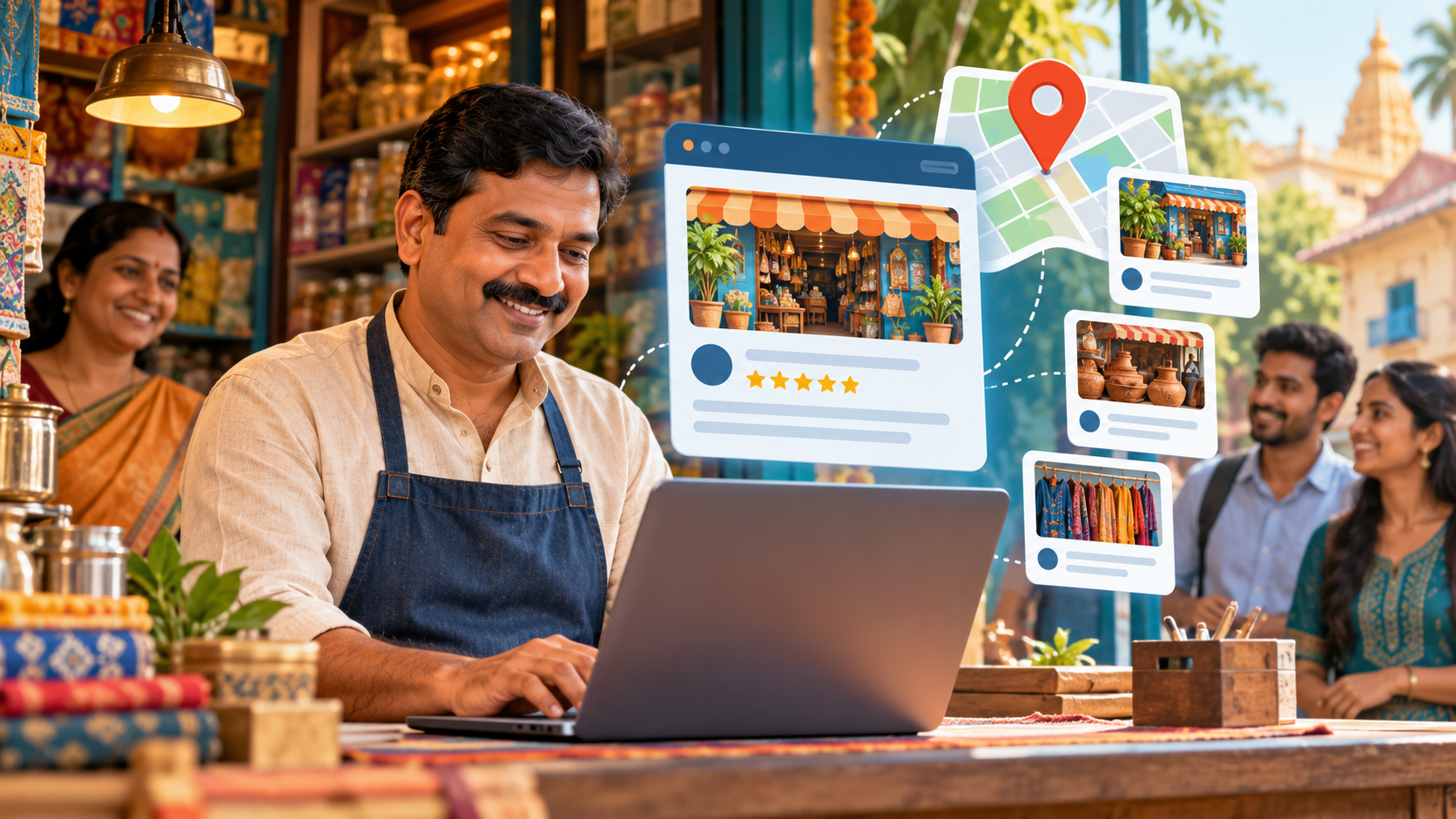
Featured image: representative AI-generated illustration.
share Share now

 All Services
 Classifieds Ads
 Service Experts
 Jobs
 Explore Travel
 News & Magazines
 Products
 Blogs
 Community







 Support