Campus Safety in Delhi: A Practical Checklist for Students and Colleges
02, Oct 2026
21
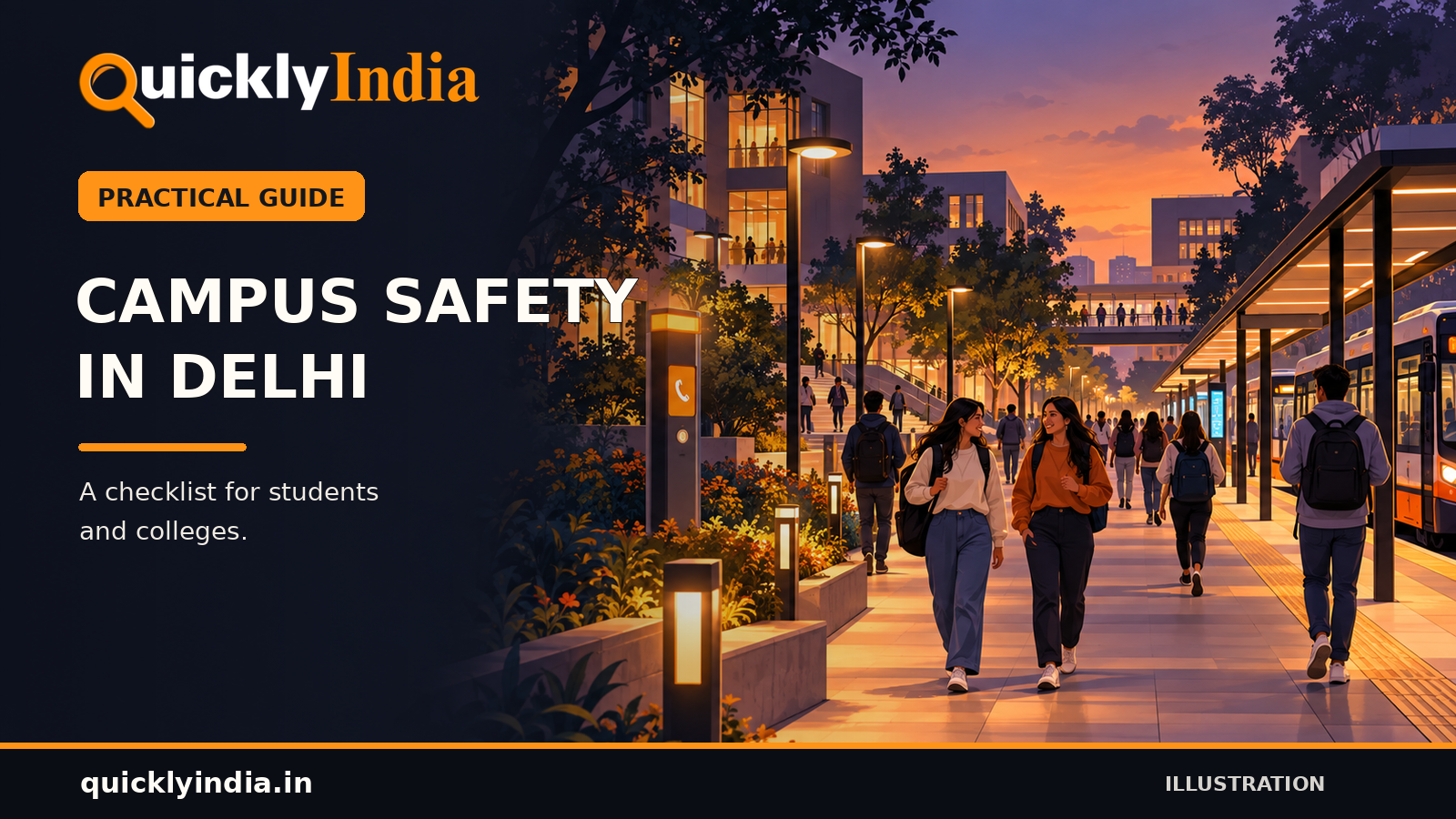
The recent student marches in Delhi have renewed attention on the places between a classroom and home: the lane to a Metro station, a poorly lit bus stop, a park path and the college complaint desk. A useful safety plan must make these spaces and systems work better. It should not depend on telling women to stay indoors or avoid education, work and public life.
This guide separates actions a student can take today from the changes that colleges, transport agencies and local authorities should deliver. It is general information; in an emergency, seek immediate help rather than waiting for an institutional process.
1. Know the immediate help options
If someone is in immediate danger in India, call 112, the national emergency response number. Delhi Police also lists 1091 for women in distress. Save these numbers, and check that your phone can make an emergency call. If you are helping someone else, ask what support they want, stay with them if safe to do so, and avoid sharing their identity or story without consent.
For a non-emergency concern on campus, find the college security desk, student support office and the institution's Internal Complaints Committee (ICC) contact details. The University Grants Commission (UGC) has told higher education institutions to display ICC member contacts and relevant helplines prominently. If the details are not visible, ask the college to publish them on its website and notice boards.
2. Record a problem route without shifting blame
Students know where the gaps are. A short route audit can make a request to authorities specific:
- Identify the exact stretch, nearest landmark and usual time of concern.
- Note broken streetlights, blocked footpaths, isolated stops, poor last-mile transport or places where help is hard to reach.
- Report the issue to the relevant college and civic or transport agency, and keep the complaint reference if one is issued.
- Ask for a date for inspection or repair and follow up on the same reference.
The point of this exercise is to improve the route. It is not to advise women that using it makes them responsible for harassment or violence.
3. Use the right complaint channel
The UGC's regulations require higher education institutions to have an ICC for sexual-harassment complaints involving women employees and students. A college should clearly explain how to contact its ICC, what support is available and how privacy will be handled. Where an incident is a crime or occurs outside an institution's process, the person affected may also seek police assistance. The ICC and a police investigation serve different purposes; a student need not guess which one is the only option before asking for help.
When approaching an office, write down the date, location, what happened and any information the person is comfortable sharing. Save relevant messages or other material securely. Do not circulate screenshots, photos or names in public groups. The person affected should remain in control of whom they tell wherever possible; institutions should explain any legal reporting duties that apply.
4. What colleges should check this month
An effective campus plan needs named owners and follow-up dates. Colleges can start with this checklist:
- Publish current ICC contacts, office hours and an accessible way to request help.
- Audit gates, paths, toilets, bus stops and routes to the nearest Metro station with students, including evening users.
- Escalate lighting, encroachment and transport gaps to the agency that can fix them, and track each request.
- Train staff and security personnel to respond without victim-blaming, public disclosure or informal pressure to withdraw a complaint.
- Share progress with students: what was reported, what was fixed and what is still pending, without exposing complainants.
The UGC has specifically urged institutions to constitute functioning ICCs, run awareness programmes and display member contacts and helplines. These are concrete starting points, not substitutes for repair work and accountable responses.
5. How friends and bystanders can help
Listen without pressing for details. Ask whether the person wants company, emergency help, information about the ICC or assistance reaching a trusted support person. Do not post allegations or identifying details online to draw attention to a case. If there is an immediate threat, call 112. Later, help follow up on a complaint only with the person's agreement.
The Delhi protests have made one point clear: a safer campus is a shared institutional and public responsibility. Lighting, transport, complaint systems and respectful responses can be checked and improved. Students should be able to see whether that work is actually happening.
Official references
share Share now

 All Services
 Classifieds Ads
 Service Experts
 Jobs
 Explore Travel
 News & Magazines
 Products
 Blogs
 Community




























 Support